The Replay Question
I finished a game last week. Good game. Solid 15-hour campaign. Enjoyable story. Tight mechanics.
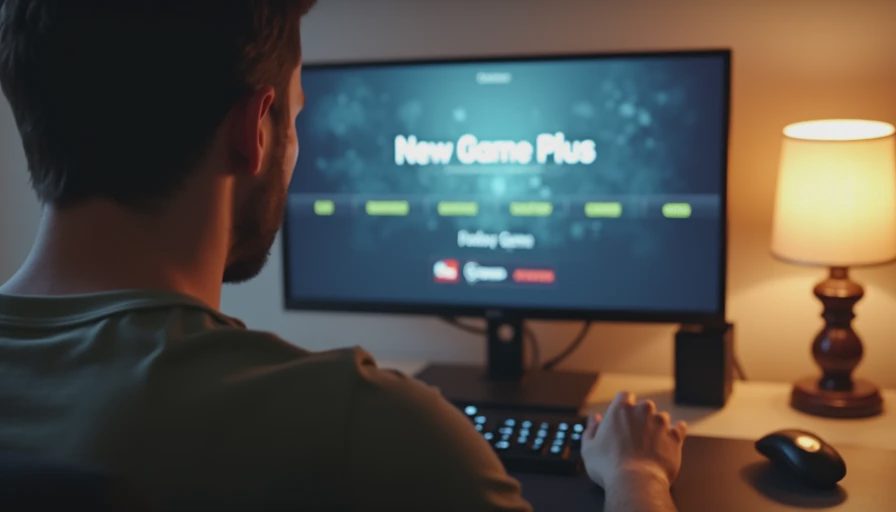
When the credits rolled, I sat there for a moment. The game asked if I wanted to start New Game Plus.
I thought about it. Then I said no.
Not because the game was bad. It wasn't. It was genuinely good.
But I knew I'd never play it again.
That got me thinking: what makes a game replayable? And why does it matter?
For busy adults, replay value matters a lot. If you only have time for a few games a year, you want games that keep giving. Games that reward a second playthrough. Games that offer something new each time.
Here's how I evaluate replay value.
What Replay Value Actually Means
Replay value isn't just about length. It's not about how many hours you can sink into a game.
It's about whether the game offers something meaningful on a second, third, or fourth playthrough.
Some games are designed to be played once. You experience the story, you finish it, you move on. That's fine.
Other games are designed to reward repeated play. New content unlocks. Different paths emerge. The experience changes.
The difference matters.
The Key Signs of Replay Value
Sign One: Meaningful Choices
If a game offers choices that actually matter, that's a good sign.
Different dialogue options. Different endings. Different character builds. Different faction allegiances.
These choices create variety. They give you a reason to play again and see what happens differently.
I played a game last year where my choices genuinely changed the story. Characters lived or died based on my decisions. I played it twice just to see the other outcomes.
That's replay value.
Sign Two: Mechanical Depth
Some games have systems that reward mastery.
The combat has depth. The crafting is complex. The skill trees offer real variety.
You play once to learn the systems. You play again to master them.
I've played games where I felt like a novice on my first run and an expert on my second. That progression is satisfying. It keeps you coming back.
Sign Three: Hidden Content
Some games hide content behind specific conditions.
Secret areas. Optional bosses. Alternate endings. Missable quests.
If a game has enough hidden content, there's a reason to go back and find what you missed.
I replayed a game recently just to find a hidden area I'd heard about. It took me three hours to find it. It was worth it.
Sign Four: The "One More Run" Feeling
This is subjective, but it's real.
Some games make you want to play again immediately after finishing.
The credits roll, and you're already thinking about your next run. Different build. Different strategy. Different approach.
That feeling is replay value.
What Kills Replay Value
Not every game is replayable. Here's what gets in the way.
Linear Storylines
If the story is the same every time, there's less reason to replay.
I don't need to watch the same cutscenes again. I don't need to experience the same beats.
Linear games can still be great. But they're rarely replayable.
No Mechanical Variety
If the gameplay is the same every time, replaying gets boring.
Same weapons. Same enemies. Same strategies. Same approach.
Variety is what keeps things fresh.
Excessive Friction
Long loading screens. Unskippable cutscenes. Limited save systems.
If the friction is too high, I won't replay a game no matter how good it is.
I loved a game recently, but I'll never play it again. The loading screens were brutal. The unskippable cutscenes were painful. The experience was great once, but I can't do it again.
No New Game Plus
New Game Plus is a common feature in replayable games.
It lets you carry over progress. Weapons, levels, abilities. You start again but with more power.
Without it, starting over feels like a chore. You lose everything you worked for.
How I Decide
Here's my simple process for evaluating replay value.
Step One: Did I enjoy the first playthrough? If yes, move to step two. If no, I'm done.
Step Two: Is there content I missed? Hidden areas, alternate endings, different choices. If yes, strong replay value.
Step Three: Would a second playthrough feel different? New builds, new strategies, new approaches. If yes, good replay value.
Step Four: Can I handle the friction again? Loading screens, cutscenes, save systems. If the friction is manageable, I'll replay.
Step Five: Does the game make me want to replay? This is the gut check. If I finish and immediately want to start again, that's the strongest signal.
Why This Matters
Replay value matters more for busy adults.
We have limited time. We can't play every game. We need to be selective.
A game with high replay value gives us more bang for our buck. One purchase, many hours of enjoyment.
A game with low replay value is a one-and-done experience. That's fine. But we need to know that going in.
The Bottom Line
Not every game needs to be replayable.
Some games are meant to be experienced once. And that's okay.
But if you're looking for games that keep giving, look for meaningful choices, mechanical depth, hidden content, and that "one more run" feeling.
If a game has those things, it's worth playing twice.
Or three times. Or more.
Worth your time, or not?
Comments
No comments yet — be the first to share a thought.