The First Eight Hours
I'm about to start a new game.
I've bought it, downloaded it, and cleared my evening. The kids are in bed. My wife is reading. I've got about two hours before I need to sleep.
I'm excited. But I'm also cautious. I've been burned before.
So I go into every new game with a framework. A checklist. A way to evaluate whether this game is worth my time.
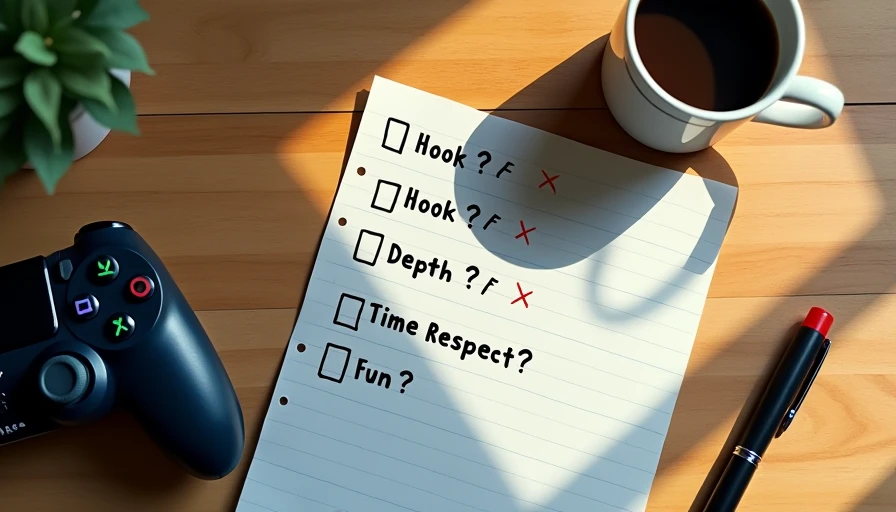
I call it the First Eight Hours Checklist.
It's not a review. It's a decision tool. It helps me figure out whether to commit, to keep going, or to quit.
Here's what I look for.
Before I Even Start
The evaluation begins before I launch the game.
Why am I playing this? Is it because I'm excited? Because a friend recommended it? Because I feel obligated? If I'm playing out of obligation, that's a warning sign.
What do I want from it? Relaxation? Challenge? Story? Escapism? Different games serve different purposes. I want to make sure this game matches what I need right now.
How much time do I have? If I have a busy month ahead, I shouldn't start a massive RPG. If I have downtime, I can be more adventurous.
These questions help me set expectations.
The First Hour: The Hook

The first hour is about the hook.
Does the game grab me? Does it make me want to keep playing?
Does it respect my time from the start? If the first hour is a tutorial that treats me like I've never played a game before, that's a bad sign. If I'm watching cutscenes more than I'm playing, that's a bad sign.
A good game hooks you early. It teaches you mechanics while you're having fun.
Is the onboarding smooth? I don't want to read a manual. I don't want to watch a twenty-minute tutorial video. I want to learn by doing.
Do I care about anything that's happening? If I don't care about the story, the characters, or the world, that's a problem.
How does it feel? Is the movement responsive? Are the controls intuitive? A game can have great graphics, but if it feels clunky, I won't enjoy it.
Hours Two Through Four: The Depth
The next few hours are about depth.
Is there variety? Will the game offer different experiences, or is it going to be more of the same? If I've seen everything by hour four, I'll get bored.
Is there meaningful progression? Am I getting better? Unlocking new abilities? Learning new strategies? Progression can be about player skill, not just levels.
Is the challenge appropriate? Not too easy. Not too hard. The sweet spot where it's engaging but not frustrating.
Is the story interesting? If the game has a story, do I want to know what happens next? I don't need a masterpiece. I just need to care a little.
Hours Five Through Eight: The Commitment
By hour eight, I should know if this game is for me.
Is the loop sustainable? The core gameplay loop is what I'll be doing for the rest of the game. Do I enjoy it? Can I see myself doing it for another twenty hours?
Is the game respecting my time? Too much filler? Too much travel? Too much grinding? Too many loading screens? If the game is wasting my time, I'm done.
Am I still engaged? Am I looking forward to playing again? Or am I playing out of obligation? If I'm not excited about the next session, that's a sign.
Have I had any moments of genuine enjoyment? I should have experienced some real joy by hour eight. If it's been all work and no fun, it's not the right game.
My Personal Signals
Beyond the checklist, I pay attention to my own signals.
The "One More Turn" Signal. If I'm telling myself "just one more turn" or "one more mission," that's a good sign. I'm engaged.
The "Checking the Clock" Signal. If I'm constantly looking at the clock, that's a bad sign. I'm not enjoying myself.
The "I Could Stop Now" Signal. If I feel like I could easily stop and not care about coming back, that's a bad sign.
The "I Need to Know What Happens Next" Signal. If I'm thinking about the game when I'm not playing, that's a good sign.
When to Quit
If a game hasn't grabbed me by hour eight, I quit.
I used to force myself to keep going. "It'll get good later." "Everyone says this is great." "I spent money on this."
Now I give myself permission to stop.
Eight hours is enough. That's the length of a workday. If a game hasn't shown me something worthwhile by then, it's not going to.
The Bottom Line
The first eight hours matter.
Not because I need to love a game in the first eight hours. But because I need to see potential. I need to see a reason to keep going.
Hook. Depth. Commitment. Signals.
If a game passes the checklist, I stick with it. If it doesn't, I quit.
No guilt. No obligation. No sunk cost.
Just a practical way to decide whether a game is worth my time.
Worth your time, or not?
Comments
No comments yet — be the first to share a thought.