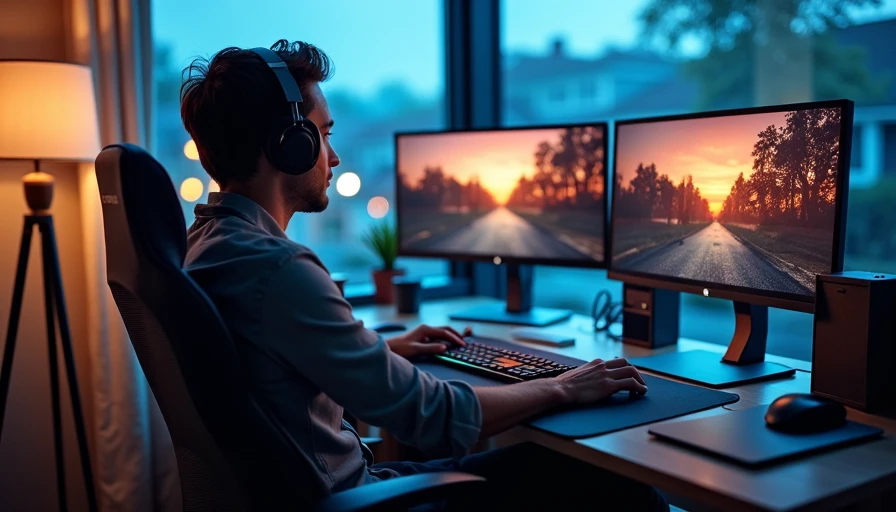
After a full day of meetings, errands, homework, and the mysterious disappearance of your free evening, relaxing pc games can be exactly what you need. The catch is that a game can look cozy in a trailer and still demand thirty minutes of tutorials, daily chores, or the reflexes of a caffeinated teenager. For busy adults, the best choice is not always the most famous game. It is the one that becomes enjoyable quickly, respects interruptions, and leaves you feeling better instead of behind.
What makes a PC game genuinely relaxing?
A relaxing game usually reduces pressure in several ways. It might remove combat entirely, offer forgiving difficulty, use generous checkpoints, or let you pause whenever real life calls. Clear controls matter too. When you only have forty-five minutes after dinner, spending the first fifteen remembering a complicated interface is not peaceful; it is unpaid administrative work.
Good relaxing pc games also provide satisfying progress without demanding constant optimization. Building a small town, arranging a farm, solving a gentle puzzle, or exploring a quiet landscape can give your brain something pleasant to focus on. The ideal pace lets you make meaningful progress during a short session, while still giving you a reason to return tomorrow.
That does not mean every calm game is simple. Cities: Skylines can become a serious planning exercise, and Dorfromantik still asks you to think about tile placement. The difference is that failure usually feels informative rather than punishing. You can experiment, close the game, and come back without losing your entire night.
Best relaxing PC games for short sessions
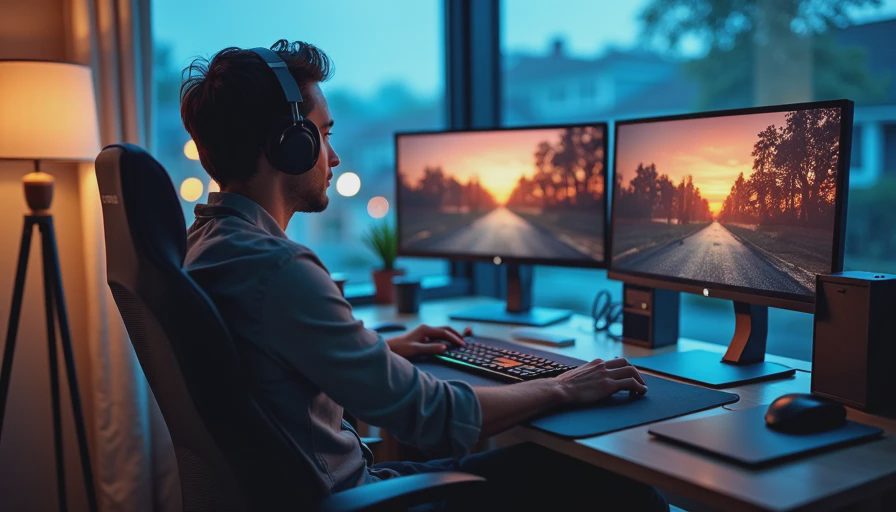
For ten- to thirty-minute sessions, start with games that save frequently and do not require a major commitment before the fun begins. Dorfromantik is a strong example. You place landscape tiles, build connected villages, and create a pleasant map with almost no mechanical friction. A session can end after one tile or continue for an hour, which is useful when someone in the house suddenly needs help finding a charger.
Unpacking is another dependable option. Each level asks you to place household objects in rooms while quietly telling a story through possessions and spaces. It is structured, tactile, and easy to stop between rooms. PowerWash Simulator takes a more repetitive route, turning cleaning into progress. The sound and visual transformation can be oddly soothing, although larger jobs require more time than the early levels suggest.
If you want something warmer and more character-focused, A Short Hike is compact, funny, and welcoming. It can be finished in a few hours, but there is no need to rush. These are relaxing pc games in the practical sense: they work when your available time is measured in small pieces rather than open weekends.
Cozy games that reward a longer evening
Some relaxing pc games need more room to breathe. Stardew Valley is the obvious recommendation, but it is worth understanding the tradeoff. Its farming, fishing, relationships, and exploration are inviting, yet the in-game clock can create a gentle sense of obligation. If optimizing every crop turns your hobby into another job, ignore the perfect layouts and play at your own pace. The game is much more relaxing when you stop treating each season like a quarterly business review.
Spiritfarer offers a beautiful management adventure built around helping spirits move on. It is calm in its movement and resource gathering, but its emotional story can be heavy. That is not a flaw, though it means it is better for players seeking reflective relaxation than pure escapism.
House Flipper gives you straightforward before-and-after satisfaction. Buy a neglected property, clean it, paint it, and arrange furniture. The early work is especially good after a stressful day because the objectives are visible and finite. Later renovations introduce more systems, so the game becomes less meditative if you chase every upgrade.
Relaxing does not mean boring
A common mistake is assuming relaxing pc games must have no challenge. Many players still want decisions, discovery, or a little tension; they simply do not want every mistake punished. The Talos Principle 2 offers thoughtful environmental puzzles in a quiet setting, while Slay the Spire provides strategic depth through turn-based card battles. It is not traditionally cozy, but you can pause between turns and think without a timer shouting in your face.
For exploration, Firewatch delivers a focused walking adventure with a strong atmosphere and a manageable length. It is more story-driven than endlessly replayable, which makes it a good choice when you want a complete experience instead of another digital obligation. Euro Truck Simulator 2 is similarly flexible. A short delivery can fill an evening, and the longer drives let you settle into a comfortable rhythm. It is relaxing if driving games do not make you grip the mouse like a steering wheel.

How to choose one without wasting money
First, check the actual session structure rather than relying on tags such as cozy or casual. Read whether the game has autosaves, pause options, adjustable difficulty, and a clear stopping point. User reviews are particularly useful when filtering for phrases like “slow start,” “grindy,” “needs a controller,” or “good for short sessions.” Those details reveal the time cost that store descriptions usually skip.
Second, consider your energy level. A puzzle game can be peaceful on a Sunday morning and exhausting at 9:30 p.m. after a long workday. If your brain is worn out, choose tactile tasks such as arranging, cleaning, planting, or driving. If you still want mental engagement, try turn-based strategy or gentle logic puzzles. The right game depends less on genre than on the kind of attention you have left.
Finally, set a sensible price ceiling. Many excellent relaxing pc games regularly fall below $20 during Steam sales, and short narrative games can be worthwhile at $10 to $25. A discounted game is not a bargain if it sits untouched in your library, but a modest purchase with an easy return window can be a low-regret experiment.
A simple after-work gaming routine
Keep two or three options installed instead of one enormous backlog. Choose one short-session game, one deeper game, and one dependable comfort title. That gives you a menu without creating another decision problem. Before launching, decide whether you have twenty minutes or two hours. This small step prevents starting a sprawling quest when bedtime is already approaching.
Use a controller if it makes movement more comfortable, lower the volume if your household is winding down, and disable notifications that pull you back into work. Save before stopping, even when autosave is available. Nothing ruins a relaxing evening faster than discovering that your last peaceful hour vanished because you closed the wrong menu.
My practical shortlist would be Dorfromantik for quick calm, Unpacking for tactile progress, A Short Hike for a compact adventure, Stardew Valley for a longer routine, and Euro Truck Simulator 2 for low-pressure momentum. They offer different kinds of comfort, so the useful question is not which game is universally best. It is which one matches the attention you have tonight.
Fun is not the same as worth-it when your free time is limited. The best relaxing pc games make it easy to start, satisfying to stop, and painless to return. That is a better promise than endless content, especially after a day when you already had enough obligations. Worth your time, or not? If the answer is a game that leaves room for real life, it probably is.
Comments
No comments yet — be the first to share a thought.