
The best games to play are not always the newest, biggest, or most expensive releases. When work ends, dinner needs making, and tomorrow's alarm is already judging you, a game has to earn its place. I look for quick starts, useful save systems, reasonable learning curves, and enough variety to make a 45-minute session feel complete. Worth your time, or not? That is the question behind every recommendation here.
What makes a game fit adult schedules?
A good after-work game respects the difference between having free time and having usable attention. A player might technically have two hours, but after a long day, only 40 minutes may be available for focused play. The best games to play in that situation give you something enjoyable before demanding a major investment.
Short sessions work especially well with games such as Hades, Balatro, Vampire Survivors, and Slay the Spire. Each run, round, or encounter has a clear shape. You can stop after one attempt without feeling as if you abandoned a living world. For a calmer experience, Stardew Valley and Dorfromantik let you make visible progress without requiring perfect reflexes.
The other important feature is friction. If a title takes 30 minutes to explain its menus, insists on a long tutorial, or buries its fun beneath repetitive errands, it is a poor match for tired evenings. That does not make it a bad game. Good game, bad fit is a perfectly valid conclusion.

Best games to play for short solo sessions
Hades remains one of the easiest recommendations for busy players because a failed run still teaches you something and often unlocks a new conversation, weapon option, or story beat. A typical session can be 20 minutes, although the familiar “one more run” problem is real. Dead Cells offers a sharper action challenge, while Into the Breach turns a complete tactical puzzle into something you can solve during a quiet evening.
If you want atmosphere rather than constant pressure, Firewatch is a compact narrative choice that can be completed over several nights. The Forgotten City rewards curiosity without becoming an enormous open-world commitment. Portal 2 is also an excellent value when you want clever puzzles, memorable writing, and levels that naturally break into manageable chunks.
For players who enjoy management, Two Point Hospital and Mini Metro provide satisfying systems without demanding that you memorize a 100-hour build order. The best games to play alone usually have a reliable stopping point. That could be the end of a run, a completed mission, a solved puzzle, or simply a day-night cycle in the game world.
Multiplayer picks that do not require a second job
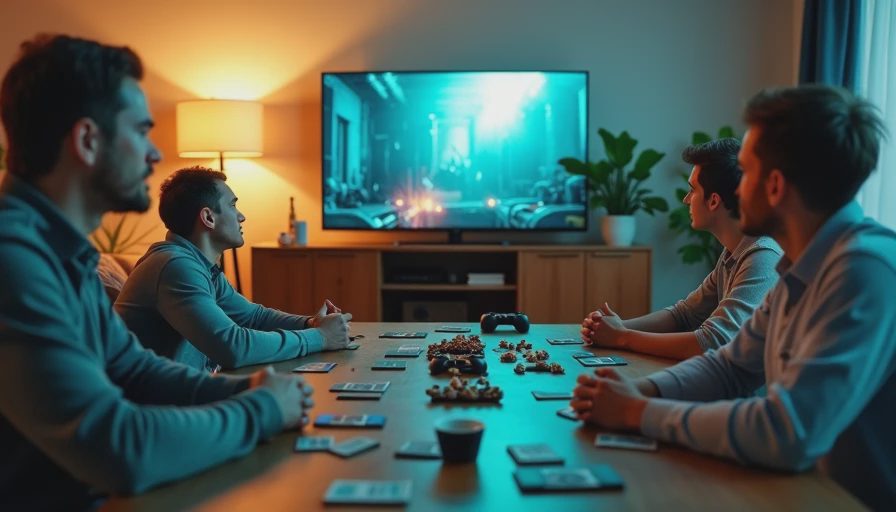
Co-op is a great way to stay connected with friends, but some online games quietly turn friendship into a scheduling department. If everyone needs three uninterrupted hours and a shared progression plan, missed sessions become stressful. The best games to play with adults make joining easy and absence survivable.
Deep Rock Galactic works well because a mission can often fit into a single evening, and the team objective is clear. Overcooked! 2 is excellent for short, chaotic sessions, provided everyone accepts that dinner preparation in a game is not necessarily relaxing. For something more relaxed, Minecraft and Terraria let players contribute at different speeds. One person can build a house while another gathers materials or explores.
Mario Kart 8 Deluxe and Rocket League are useful when the group has only 30 minutes. No one needs to remember a complicated plot, and a late arrival does not ruin the campaign. Sea of Thieves can create wonderful shared stories, but it asks for more time and patience than a quick competitive match. That difference matters when the group is coordinating around children, commutes, and work calls.
Big games worth the commitment
Some long games are absolutely worth your time, but they need an honest entry cost. The best games to play for a longer weekend project should offer meaningful progress even when you can only play twice a week. Baldur's Gate 3 is a strong example: its turn-based combat allows pauses, its quests support different approaches, and save-anywhere flexibility makes interruptions less painful.
The Legend of Zelda: Tears of the Kingdom rewards wandering, experimentation, and short objectives, though its size can feel overwhelming. Elden Ring offers remarkable exploration, but it has a steeper difficulty curve and fewer conveniences for players who dislike repeated attempts. Red Dead Redemption 2 is richly made and beautifully paced, yet its deliberate opening can test the patience of someone who wants immediate action after work.
Before buying a large role-playing game, ask what kind of commitment you actually want. A 60-hour adventure played over four months can be more satisfying than a 15-hour title rushed through in a weekend. The best games to play are not measured only by completion time. They are measured by how often you look forward to returning.
How to choose without wasting money
Start with your available session length. For 20 to 40 minutes, choose a run-based game, puzzle game, racing game, or compact strategy title. For one to two hours, a story mission in Cyberpunk 2077, Control, or Marvel's Guardians of the Galaxy may work better. If your schedule changes constantly, prioritize games with manual saves or frequent checkpoints.
Next, identify your tired-brain preference. Some nights call for the clear decisions of Into the Breach. Other nights are better suited to PowerWash Simulator, Unpacking, or Euro Truck Simulator 2, where progress is steady and failure is minimal. A game can be highly acclaimed and still be the wrong answer when your attention is gone.
Price also changes the calculation. A $20 indie game that provides 15 satisfying hours can be a better purchase than a $70 blockbuster that sits untouched after its opening weekend. Services such as Xbox Game Pass, PlayStation Plus, and Nintendo Switch Online can reduce the risk, but a large catalog can create its own problem: browsing replaces playing. Pick two options, read the refund rules, and start the one that matches tonight's energy.
A simple after-work gaming routine
Keep one comfort game and one focused game installed. The comfort option might be Stardew Valley, Balatro, or a racing title. The focused option could be a campaign game with a clear next mission. This small rotation prevents decision fatigue without turning gaming into homework.
Set a stopping point before launching. “One chapter,” “two matches,” or “one run” is more useful than promising yourself an indefinite evening. If a game repeatedly takes 25 minutes to become interesting, stop treating that delay as an obligation. The best games to play should provide a reasonable return on your first hour, not ask you to prove your commitment.
Finally, use your backlog as a menu, not a debt list. Install one older favorite, one short new game, and one cooperative option. Ignore release-date pressure. A discounted title you genuinely start tonight beats a famous launch sitting in your library for six months.
For busy adults, the best games to play are the ones that fit real life while still feeling like real entertainment. Choose for energy, session length, and friction rather than hype. Fun is not the same as worth-it, but a game that respects your limited time has a much better chance of delivering both.
Comments
No comments yet — be the first to share a thought.