The best games for casual gamers do not demand a second job, a headset full of shouting strangers, or an entire Saturday before anything interesting happens. They let you make progress in short sessions, understand the controls quickly, and stop without feeling punished. That matters when work runs late, dinner needs making, or the kids have finally gone to bed and you have 45 quiet minutes left.
I have nothing against enormous role-playing games or competitive shooters. I still enjoy them when life allows it. The problem is buying a 100-hour adventure because everyone online says it is essential, then watching it sit untouched after the opening weekend. For busy adults, a good game needs to respect time first. Fun is not the same as worth-it.
What makes a game work for a busy adult
The strongest games for casual gamers usually offer a clear first session. You can start playing within a few minutes, learn the basic loop without reading a manual, and reach a satisfying stopping point. A match, puzzle, race, mission, or level should feel complete even if you never return that evening.
Save flexibility is just as important. Games with frequent autosaves or manual saves at sensible points fit real schedules better than titles that force you to replay 30 minutes because someone called during a cutscene. The ideal game also avoids excessive daily chores. Missing three days should not create a mountain of catch-up tasks.
Difficulty options help, but they are not the whole answer. A relaxed setting can make a story game more approachable, while adjustable timers and assist modes can make a puzzle or platformer less tiring. Look for design that gives you control over pace. If a game respects your attention, it has already cleared an important test.
The best genres for short sessions
Puzzle games remain one of the safest starting points. Titles such as Dorfromantik, The Case of the Golden Idol, and Unpacking provide clear goals without requiring a large memory commitment. You can play for 20 minutes, solve a few problems, and leave with the pleasant feeling that something moved forward.
Roguelites can also fit well, provided you enjoy repeating runs. Hades is a polished example because each attempt is short, controls feel responsive, and story conversations continue between failures. Vampire Survivors is even easier to dip into, with simple controls and runs that often fit into a lunch break or late-night wind-down.
For something more social, Mario Kart 8 Deluxe, Rocket League, and Fall Guys offer rounds that end cleanly. Multiplayer brings its own frustrations, especially if you care about winning, but these games do not require a huge lore investment. Among games for casual gamers, round-based options are useful because they give you a natural exit.
Story games without the homework
Some casual players want a strong story but do not want to remember a fictional family tree after a long workday. That is where focused adventures shine. Firewatch, A Short Hike, What Remains of Edith Finch, and The Stanley Parable: Ultra Deluxe are approachable because their goals stay visible and their campaigns do not bury the player under systems.
Life is Strange and Telltale’s The Walking Dead are also built around decisions and scenes rather than endless combat practice. They can be emotionally heavy, so they are not always ideal when you want to relax, but their episodic structure makes it easier to plan a session. You can finish a chapter, save your place, and return later without spending an hour relearning the controls.
If you prefer action, Spider-Man Remastered offers a generous assist system and a story that can be enjoyed without clearing every icon on the map. Play the main missions, ignore the collectible cleanup, and you have a much better experience than treating the map like a second job.
How to avoid buying a time sink
Before purchasing, check the expected session length rather than only the total review score. A highly rated live-service game may be excellent, but it can also ask for regular logins, battle passes, rotating events, and a growing list of objectives. That structure works for some players. It is a poor fit if you already feel guilty about an unfinished backlog.
Read recent Steam reviews or watch 10 minutes of unedited gameplay. Pay attention to how long it takes to reach the first real decision. If the video shows menus, tutorials, crafting screens, and exposition for most of that time, expect a slow start. Search specifically for phrases such as short sessions, good checkpointing, no grind, and easy to pause.
Price matters too. Many games for casual gamers become better purchases at $20 to $30 than at a $70 launch price. Nintendo’s first-party releases often hold their prices longer, while PC storefronts and subscription services can offer more flexibility. A discount does not automatically make a bad fit good, but it lowers the regret if the game misses your schedule.
A practical after-work gaming setup
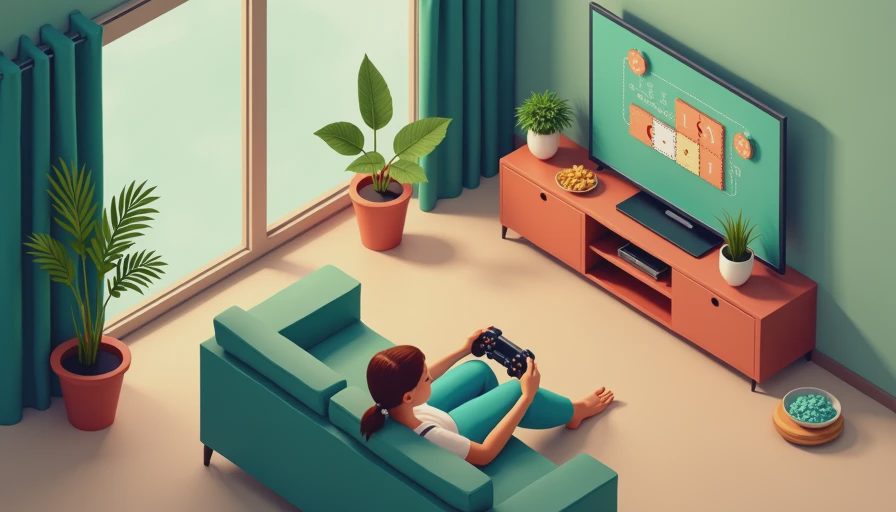
Start by choosing one main game and one backup game. The main choice can be a story adventure or a longer strategy title. The backup should be something you can launch immediately when your brain is tired, such as Balatro, PowerWash Simulator, Slay the Spire, or a familiar racing game. This prevents the common routine of scrolling through a library for 25 minutes and then watching television instead.
Set a realistic session rule. Thirty to 60 minutes is enough for many games, and stopping while you still feel interested makes it easier to return tomorrow. Disable unnecessary notifications, keep the controller charged, and install updates before the evening rather than during it. Small amounts of friction matter when your available time is limited.
Cloud saves are valuable if you move between a console, handheld, or PC, but confirm that the specific game supports them before planning around the feature. A Steam Deck, Nintendo Switch, or current console can be especially convenient because quick suspend and resume reduce startup time. Convenience is not a luxury here; it is part of the game’s value.
Games for casual gamers by mood
When you are tired but want a little control, choose a management or building game with a forgiving pace. Stardew Valley, Dorfromantik, and Islanders let you make small decisions without demanding constant reactions. When you want a story, choose Firewatch or A Short Hike. When you want immediate action, try Hades, Vampire Survivors, or a few rounds of Mario Kart.
When you want to play with a partner or family member, look for shared-screen games with simple rules. Overcooked! can be funny and chaotic, though it becomes stressful at higher difficulty. Untitled Goose Game offers cooperative mischief without complicated combat. Keep the evening goal modest: finish one level or complete one small task, not conquer the entire campaign.
The right answer depends on your mood, platform, budget, and tolerance for repetition. That is why there is no universal list of games for casual gamers. A relaxing puzzle game can be perfect on Tuesday and completely wrong after a difficult day when you need louder action.
The final test: is it worth your time?
A good purchase should pass three questions. Can you begin playing quickly? Can you stop without losing meaningful progress? Will the core activity still feel enjoyable after the novelty fades? If the answer is yes, the game has a strong chance of fitting adult life.
Do not feel obligated to finish a game simply because you paid for it. A $15 title that gives you six excellent evenings can be better value than a $70 blockbuster that becomes homework. Use refunds, demos, sales, library borrowing, and subscription trials when available. Those tools let you test the fit before committing serious money.
The goal is not to play more games. It is to spend limited free time on games that leave you feeling refreshed rather than behind. Pick something easy to resume, set aside the completion checklist, and judge the experience by the moments you actually enjoy. Worth your time, or not? That is the only review score that matters after work.
Comments
No comments yet — be the first to share a thought.