The $70 Mistake I Keep Making
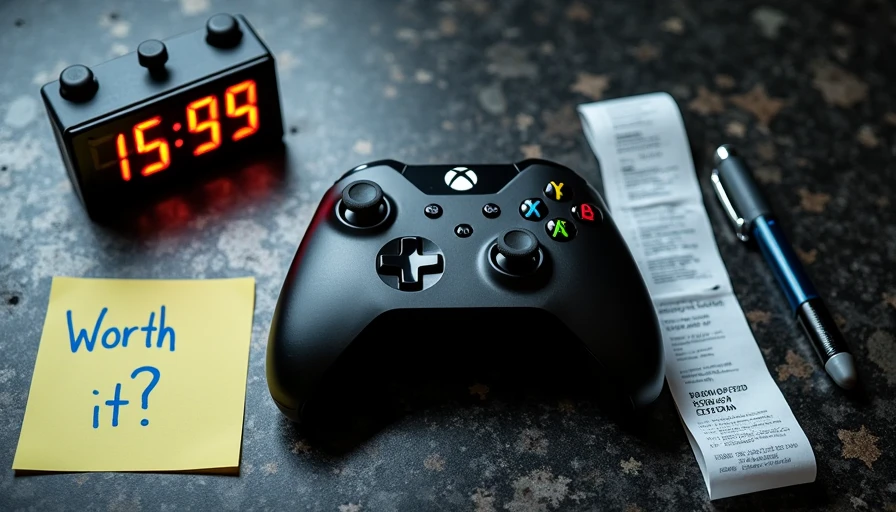
Let me tell you about a game I bought last year.
The trailers were gorgeous. The reviews were glowing. Everyone on my social feed was talking about it like it was the second coming of gaming. I pre-ordered it—something I rarely do—because I was convinced this one would be different.
It wasn't.
Three weeks later, I had put about twelve hours into it. And I realized something that made me genuinely angry:
I had enjoyed exactly two of those hours.
The other ten hours were spent walking across empty landscapes, watching unskippable cutscenes about characters I didn't care about, and fighting the same enemy type over and over while the game drip-fed me story crumbs like I was a pigeon in a park.
I kept playing because everyone said it "gets better."
It didn't.
And that's when it hit me: I had been here before. Many times. With many games. And I kept making the same mistake because I ignored the warning signs.
So I started paying attention. I started noticing patterns. And over time, I developed a mental checklist of five clear signals that a game is going to waste your time.
Here they are. Use them before you click "buy."
Sign One: The "It Gets Good After Ten Hours" Promise
This is the biggest lie in gaming.
You'll see it everywhere. In reviews. In Reddit threads. In YouTube comments. Someone will say, "Just push through the first ten hours. The combat really opens up after you unlock the skill tree."
Let me translate that for you.
"This game is boring for the first ten hours, but we're hoping you'll tolerate it because we spent a lot of money on marketing."
Here's my rule: if a game needs ten hours to become enjoyable, it's not a slow burn. It's a hostage situation. You're paying $70 to do chores before you're allowed to have fun.
I remember buying a massive open-world RPG—you know the one. It had a 90 on Metacritic. Everyone swore it was a masterpiece. I gave it eight hours. I spent most of that time staring at loading screens and running across empty terrain. When I finally hit a moment that felt engaging, I was too exhausted to appreciate it.
Good games hook you in the first hour. They teach you mechanics while you're having fun. They don't treat the opening hours like a hazing ritual.
If a game can't respect your time from minute one, it's not going to start respecting it later.
Sign Two: The Map That Looks Like a Teenager's Acne
You know what I'm talking about.
You open the map for the first time, and your heart sinks. It's covered in icons. Points of interest. Question marks. Bandit camps. Collectibles. Fetch quests. Tower climb. Outpost clear. Repeat.
It looks impressive, right?
Wrong.
A map that's crammed with icons is often a sign that the game is padding its playtime with filler content. They're not giving you meaningful things to discover. They're giving you a checklist.
I've played games where I spent 30% of my session just traveling from one icon to the next. That's not gameplay. That's a commute. I've already got a commute to the office. I don't need one in my living room.
Good open worlds respect your movement. They reward exploration with genuine discoveries—not just another generic treasure chest containing crafting materials you'll never use.
If the map feels like a part-time job, walk away.
Sign Three: The Grind That's Disguised as Depth
There's a specific type of game—usually live-service or RPG—that mistakes repetition for depth.
You'll fight the same enemy for four hours to earn enough experience to fight a slightly different enemy. You'll craft the same item fifty times to level up a skill. You'll run the same dungeon over and over for a 2% drop chance on a weapon you'll replace in two levels.
That's not a game. That's a slot machine with extra steps.
And they design it that way on purpose.
These games are built around "engagement metrics." They want you to play for hundreds of hours because that looks good to investors. They don't care if those hours are fun. They just care that you're logged in.
I fell for this trap with a popular looter-shooter. I played for forty hours. At hour thirty-five, I realized I was doing the exact same mission loop I'd done at hour five. The only difference? The numbers on my gear were slightly bigger. My actual experience hadn't changed at all.
Grind is fine if it's optional. If I want to chase a rare item, let me. But if the main story forces me to grind—if I hit a "power wall" that requires me to do boring side activities to progress—that's a hard pass.
Fun isn't the same as worth-it.
Sign Four: The Save System That Hates Parents
This one is personal.
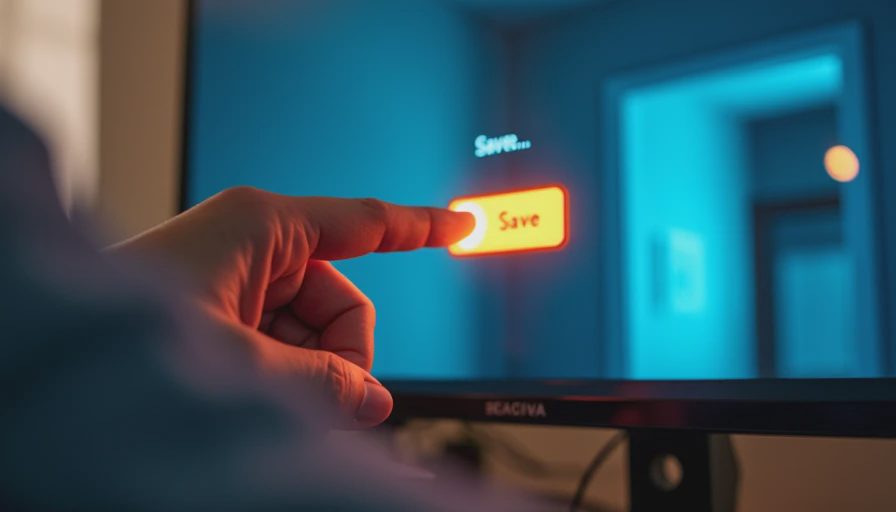
Some games still act like we live in a world where we can play uninterrupted for hours. They lock saving behind checkpoints spaced forty-five minutes apart. Or they make you reach a specific "save point" that's buried deep inside a dungeon. Or worse—they don't let you save mid-mission at all.
I have two kids.
My gaming sessions can be interrupted at any moment by a nightmare, a spilled drink, or a sudden existential crisis about a missing homework assignment. I need a save system that lets me walk away right now, not in twenty minutes when I reach the next bonfire.
If I lose progress because my toddler woke up, I'm not blaming my toddler. I'm blaming the game. And I'm uninstalling it.
A game that respects your time lets you save almost anywhere, almost anytime. It's that simple.
If a game punishes you for having a life outside the screen, it doesn't deserve your money.
Sign Five: The Tutorial That Never Ends
I'm a 38-year-old operations manager. I've been playing games for three decades. I know how to use a controller. I know how to aim, sprint, and manage an inventory.
I do not need a ninety-minute tutorial that explains how to climb a ladder.
Some games treat players like they've never touched a controller before. They pad the opening hours with unskippable hand-holding. They lock basic mechanics behind story progression. They explain the same concept three times, just in case you missed it the first two times.
It's patronizing. It's boring. And it's a waste of time.
The best games teach you through play. They drop you into a level and let you figure things out. They give you the tools and trust you to experiment.
If a game is still holding your hand after the first hour, it's either designed for absolute beginners or it's artificially inflating its playtime.
Neither of those things works for me.
The Checklist You Should Actually Use
Before you buy that shiny new game, run it through this checklist:
Does it "get good later"? No thanks.
Is the map bloated with filler? Hard pass.
Is there a mandatory grind? Not worth it.
Does it have a hostile save system? Instant skip.
Is the tutorial dragging on? I'm out.
You have limited time. You have finite energy. You've worked a full week. You've done the chores. You've been a parent, a spouse, a responsible adult.
The last thing you need is a game that feels like clocking in for another shift.
You deserve better.
Worth your time, or not?
Comments
No comments yet — be the first to share a thought.